Project Activities
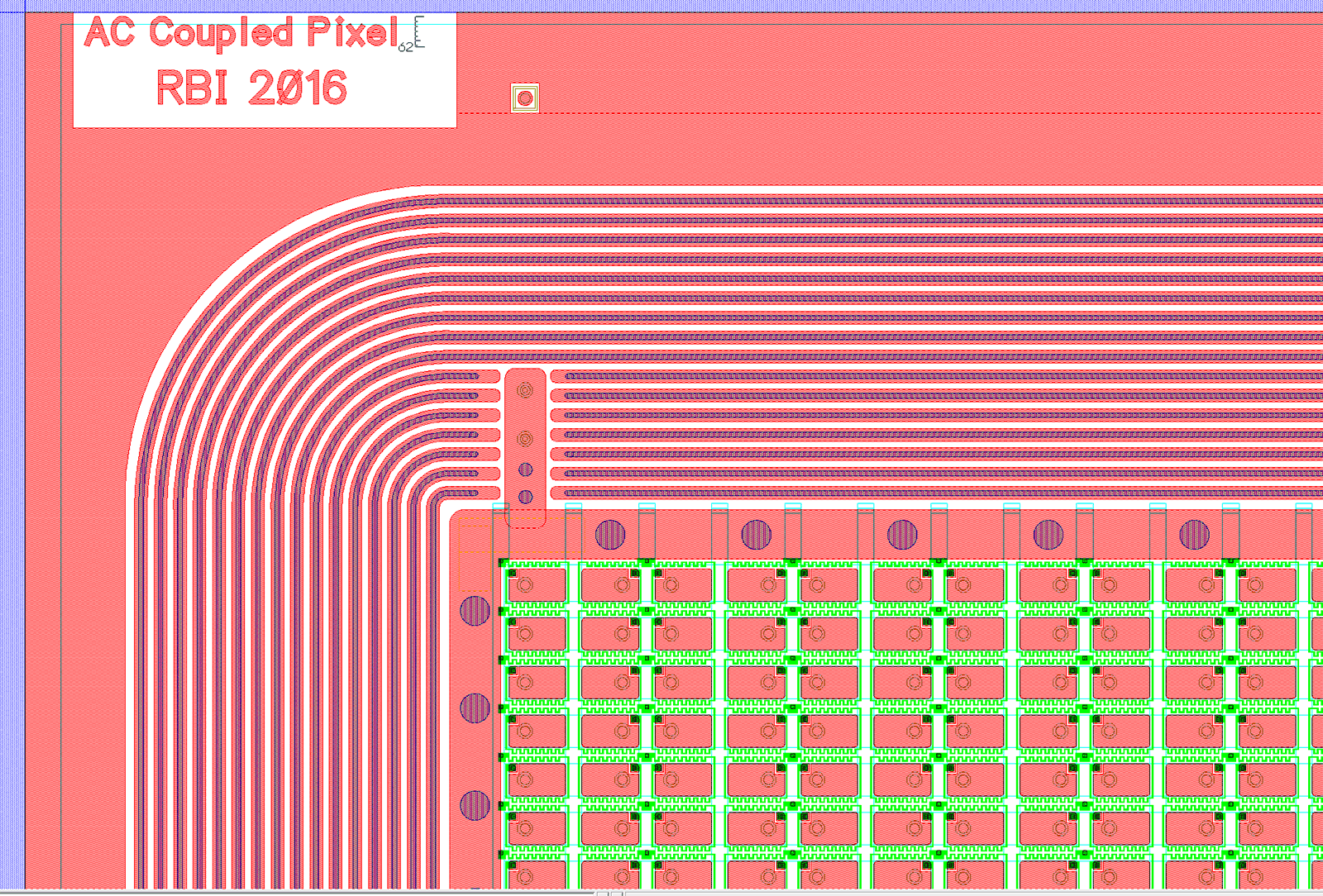
One of the main objectives of the PaRaDeSEC project is to establish at Ruđer Bošković Institute (RBI) a new organizational unit - Center for Detectors, Sensors and Electronics (CDSE).
Head of the CDSE will be appointed ERA Chair - dr. Jaakko Härkönen. According to his expertise, research activities focus on semiconductor radiation detectors, mostly on the silicon devices, and related data acquisition electronics.
The CDSE will closely collaborate with staff of Division of Experimental Physics (DEP) and Division of Materials Physics (DMP) at the RBI.
Semiconductor detectors are widely used in high-energy and nuclear physics experiments, ion beam and photon research, nuclear safety monitoring, space missions and in various medical applications. Silicon pixel and microstrip detectors provide very precise spatial resolution while being cost-effective due to well-established semiconductor manufacturing technology. We have large interest on applications of a new processing technology, Atomic Layer Deposition (ALD), which provides significant potential to improve the performance of semiconductor detectors.
The development of advanced radiation detectors is closely related with scientific activities of RBI groups involved in the PaRaDeSEC project, exploring a large variety of characterization and spectroscopy tools for semiconductor materials.
Internationally, there is close collaboration with the CERN R&D groups of RD39, RD50 and Micronova Center operated by Aalto University /VTT (Technical Research Centre of Finland Ltd). The topics include e.g. p-type MCz-Si pixel sensors for CMS Phase II Upgrade and pixelated CdTe X-ray detectors for nuclear safety and medical applications.
This site uses cookies.
Some of these cookies are essential, while others help us improve your experience by providing insights into how the site is being used.
For more detailed information on the cookies we use, please check our Privacy Policy.
-
Necessary cookies enable core functionality. The website cannot function properly without these cookies, and can only be disabled by changing your browser preferences.